

Since 2016 I have a new role in Telkom Indonesia as the AVP (now Project Leader) of the Industry Synergy. The role of Synergy Department is simply developing the capabilities (mainly digital capabilities) and expanding opportunities of Telkom Group by maximising the collaboration with the industry. As a government policy at that time, the collaborations are prioritised with the state-owned companies (BUMN) in Indonesia. More than three years have passed then. We have changed the Ministry of BUMN, Telkom’s CEO, Telkom’s BOD in charge of Synergy programs, SVP and VP of Synergy, etc. But we are still developing our paradigm of digital synergy, i.e. developing digitally supported economic ecosystems in different sectors.
Using a metaphor from the environment, an innovation ecosystems consists of interdependent parties with different or often competing objectives and concerns, living and growing together in a common digital space, unified using one platform or more to enable them to live better and grow faster. Co-creation, collaboration, and competition are some key activities of the innovation ecosystems.
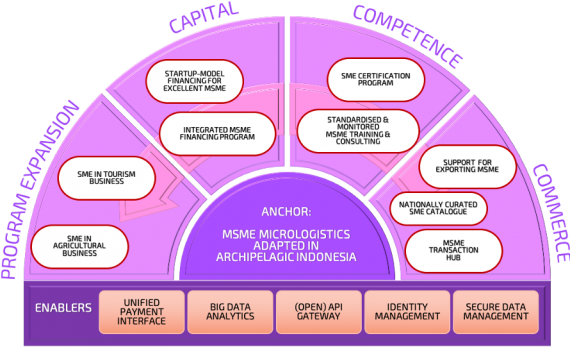
Last year, the new Minister of BUMN has addressed Telkom Indonesia to develop five ecosystems: Tourism, Agriculture, Logistics, Education, and Healthcare. We even hired a prominent global consultant to help us design the ecosystem. But this February, I requested an approval from the uplinks to add another ecosystem: the MSME ecosystem, to support non-digital micro, small, and medium business enterprises in digital way.
Previously we have had a program called RKB to develop the capability of SMEs in Indonesia. RKBs (BUMN’s creative house) have been established in 245 of 514 cities and regencies in Indonesia. In RKB, BUMNs provide training, consulting, and other facilities to leverage the capabilities of the SMEs in three product categories: culinary, craft, and fashion. But RKBs have failed to attract the SMEs since they do not really improve the sales of the SME products. An MSME ecosystem, on the contrary, should start with MSME commercialisation in mind.
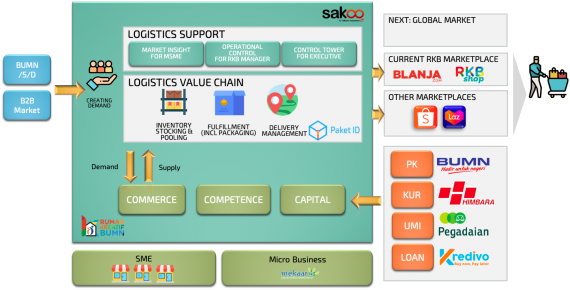
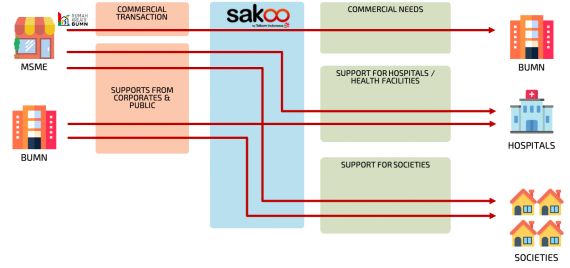
We started with a small design by utilising a multichannel marketing application called SAKOO as our first platform. In March, many cities and locations in Indonesia (and other part of the world) are locked down (until the time I’m writing this post, btw) due to COVID-19 pandemic. We found some contexts for the usecase of the platform. To generate market, we will use BUMNs (and public, using campaigns supported by BUMNs) to create demands for the MSME market. BUMNs may buy the products of the MSMEs for their need, or as an aid to support the communities or health facilities in. Surely we first tried it with Telkom. Telkom has started purchasing MSMEs products using this platform, and has also sent support to communities in Depok.
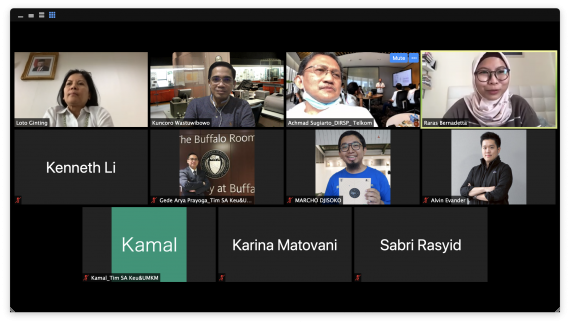
The Minister of BUMN has a new expert staff: Ms Loto S Ginting — a smart lady working previously as a Director in the Ministry of Finance, managing sovereign bond. Now she advises the Minister of BUMN in the issues of Finance and MSME development. Our BUMN Law (UU 19/2003) mentions indeed that the strategic roles of the BUMNs include providing services for public, counterweight for private business, and support to develop small business and co-operatives. We approached her to discuss this first stage of MSME Ecosystem development program. She enthusiastically accepted the program. In addition, she improve the plan to add B2B transaction facility to the first stage of the program. The transaction data from B2B and B2C are further combined with data taken from e-Procurement systems of the BUMNs to make a dashboard to ensure the increase absorption of MSMEs products and services by the BUMNs. She calls this program PADI UMKM, stands for Pasar Digital UMKM / MSME Digital Market.
Meanwhile, the Covid-19 pandemic has brought the nation into an economic crisis. To survive, MSMEs and their employees need the public involvement. The Minister addressed to rush the MSME platform development. We work with our startup partners: Anchanto, Tees, Payfast, etc to enrich PADI UMKM platform with wider multichannel, logistics management, B2B capability, financing facility, etc. We need to finish it next month (June), so we can start the transaction on July. Eight BUMNs have been selected for pilot project. A new PMO has been assigned to finish this project.
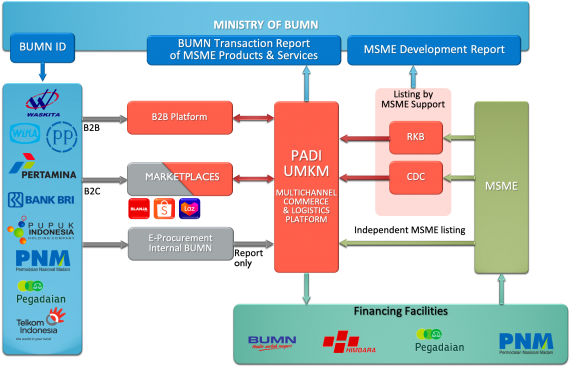
It still felt like a miracle that everything was only in ideation last February, and all activities are carried out during lockdown periods, with all meetings held using vicon, and coordination using whatsapp. Let’s hope we can finish it on June, to support more prosperous small business in Indonesia in long term, or at least, for now, just to have them survive these crises..